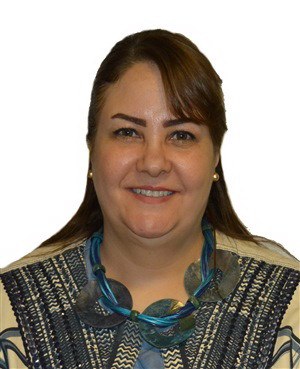
Dr. Samar ElFeky
Coordinator, a.i., Health Promotion, Noncommunicable Diseases and Mental Health (PNM) & World Health Organization, Regional Office for the Eastern Mediterranean (WHO/EMRO)
Dr Samar ElFeky is a Medical Doctor, Public Health Specialist, and international expert in health promotion, health equity, and urban governance. She holds her degree in Public Health from the University of Liverpool, United Kingdom, and advanced training in Health Systems Research from Johns Hopkins University, USA.
Currently serving as the A/Coordinator for Health Promotion, Noncommunicable Diseases and Mental Health, and Regional Adviser for Social Determinants of Health and Community-Based Initiatives at the World Health Organization Regional Office for the Eastern Mediterranean (WHO/EMRO). Dr ElFeky leads regional strategies on health promotion, healthy aging, Health in All Policies (HiAP), community-based initiatives, health literacy, physical activity, behavioral science, and social determinants of health.
She leads the regional rollout and institutionalization of the WHO Healthy Cities Program and the Regional Healthy Cities Network, overseeing baseline assessments, monitoring, and designation evaluations across numerous Member States—including Bahrain, Egypt, the Islamic Republic of Iran, Jordan, Kuwait, Lebanon, Oman, Pakistan, Qatar, Saudi Arabia, Sudan, Tunisia, and the United Arab Emirates. Her portfolio encompasses the expansion of settings-based health promotion, including Age-Friendly Cities, Health Promoting Schools (in collaboration with UNESCO), Healthy Universities, Healthy Workplaces, Healthy Villages, and Healthy Markets.
Dr ElFeky has also been instrumental in advancing urban health equity frameworks, leading the implementation of the Urban Health Equity Assessment and Response Tool (Urban HEART) across Egypt, Iran, Jordan, Morocco, Sudan, and Tunisia. She has authored and co-authored numerous peer-reviewed publications and technical reports covering healthy settings, bioethics, community health worker models, healthy aging, and health promotion strategies.